INDUSTRY:

INDUSTRY:

Ed TECH – INNOVATION & INVESTMENT

Ed TECH – INNOVATION & INVESTMENT

CLIENT:

DIGINEXT

YEAR

Jan 2024 - Sep 2024

ROLE:

PRODUCT DESIGNER

DIGINEXT

DIGINEXT

Story.

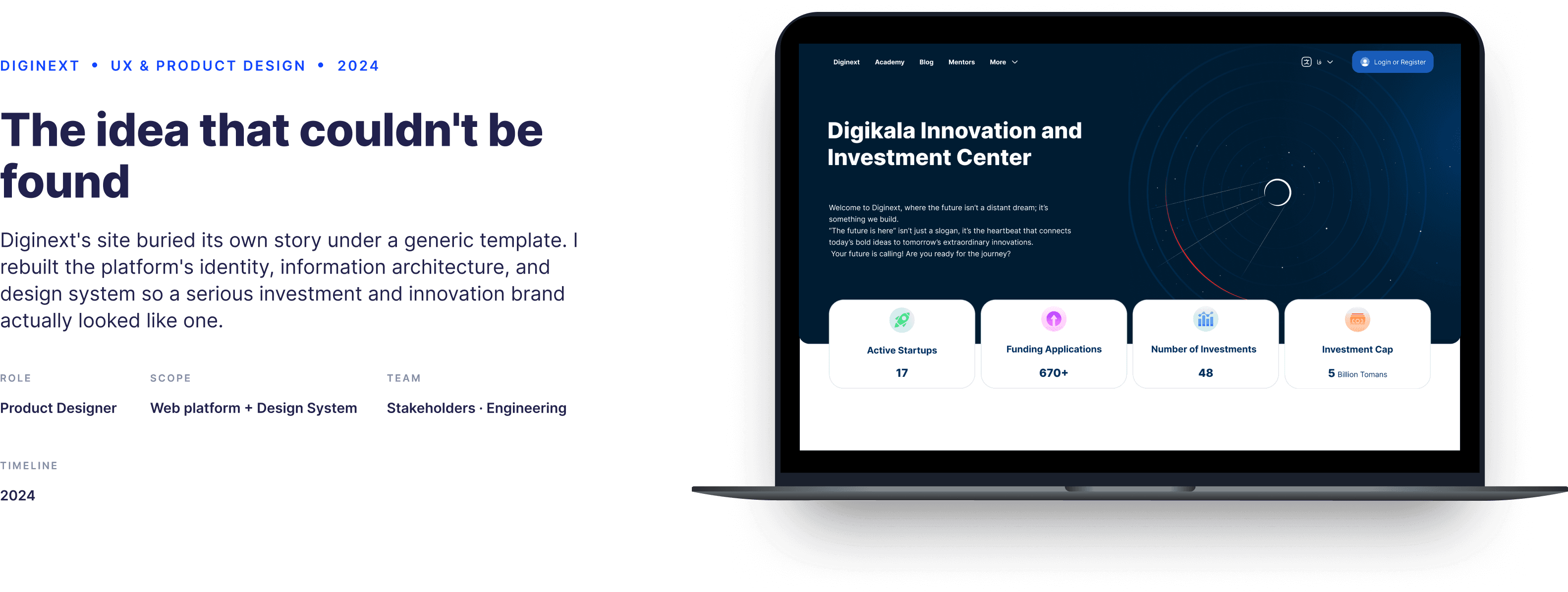
The idea that couldn’t be found.

Diginext was built on a powerful belief: that innovation belongs to everyone, not just those with the right connections. It brought together startups, investors, mentors, and talent under one roof — digital and physical. The community was real. The ambition was real. The energy in the Tehran office was unmistakable.

But the platform that was supposed to carry all of that out into the world was failing quietly. Every month, 200,000 people arrived looking for something — an event, a program, a mentor, a way in. And most of them left without finding it. Not because it wasn’t there. Because the platform made discovery feel like work.

A student in Mashhad wanted to apply to an accelerator. She found the homepage. She couldn’t find the program. She left. A founder in Isfahan wanted to meet an investor at an upcoming event. He found the site. He couldn’t find the events section. He Googled it instead. A mentor in Tehran wondered why nobody was booking her. Nobody could find the mentor directory.

These were not edge cases. They were the platform’s everyday reality. And they pointed to a design problem, not a content problem.

“To the user, a platform that hides its value still feels like a platform with no value.”


The idea that couldn’t be found.

Diginext was built on a powerful belief: that innovation belongs to everyone, not just those with the right connections. It brought together startups, investors, mentors, and talent under one roof — digital and physical. The community was real. The ambition was real. The energy in the Tehran office was unmistakable.

But the platform that was supposed to carry all of that out into the world was failing quietly. Every month, 200,000 people arrived looking for something — an event, a program, a mentor, a way in. And most of them left without finding it. Not because it wasn’t there. Because the platform made discovery feel like work.

A student in Mashhad wanted to apply to an accelerator. She found the homepage. She couldn’t find the program. She left. A founder in Isfahan wanted to meet an investor at an upcoming event. He found the site. He couldn’t find the events section. He Googled it instead. A mentor in Tehran wondered why nobody was booking her. Nobody could find the mentor directory.

These were not edge cases. They were the platform’s everyday reality. And they pointed to a design problem, not a content problem.

“To the user, a platform that hides its value still feels like a platform with no value.”


Business Problem.
A rocket with no launch pad

Diginext carries a bold ambition: connect Iran’s top startups with investors, mentors, and talent. Walking through the Tehran office, that energy was real. Walls covered in logos. Engineers at whiteboards. Investors moving fast.

But the digital platform told a different story. 200,000 monthly users were arriving to find events, programs, mentors, and funding, and leaving frustrated. Not because the content was missing. Because the platform hid its value too well.


Research.
I refused to open Figma in week one.

Too many redesigns start with aesthetics and end with the same problems underneath a
prettier coat of paint. This one started with data.

What the analytics were already telling us
12 user interviews. 3 patterns that changed everything.



Final Design


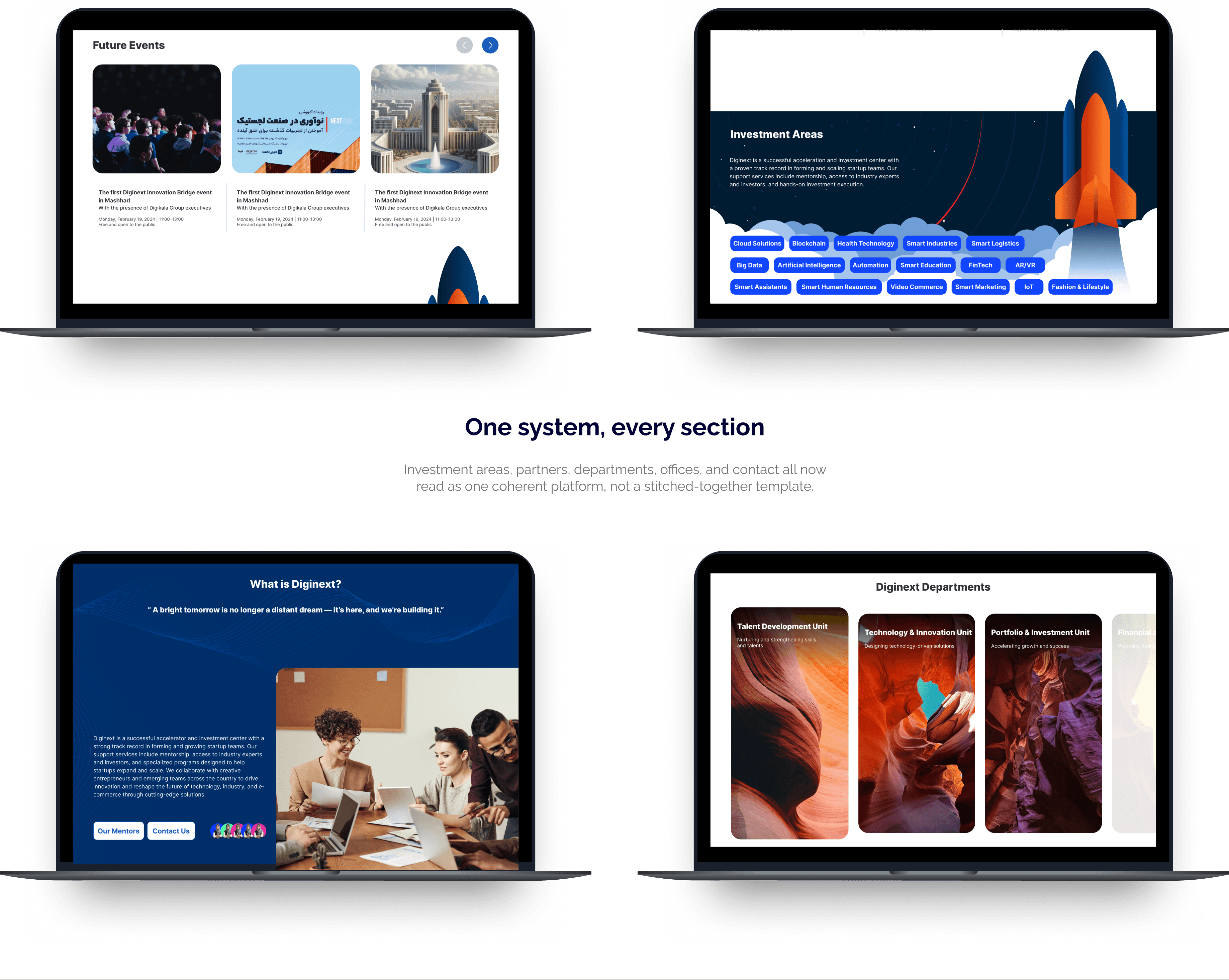
Design System & IA.
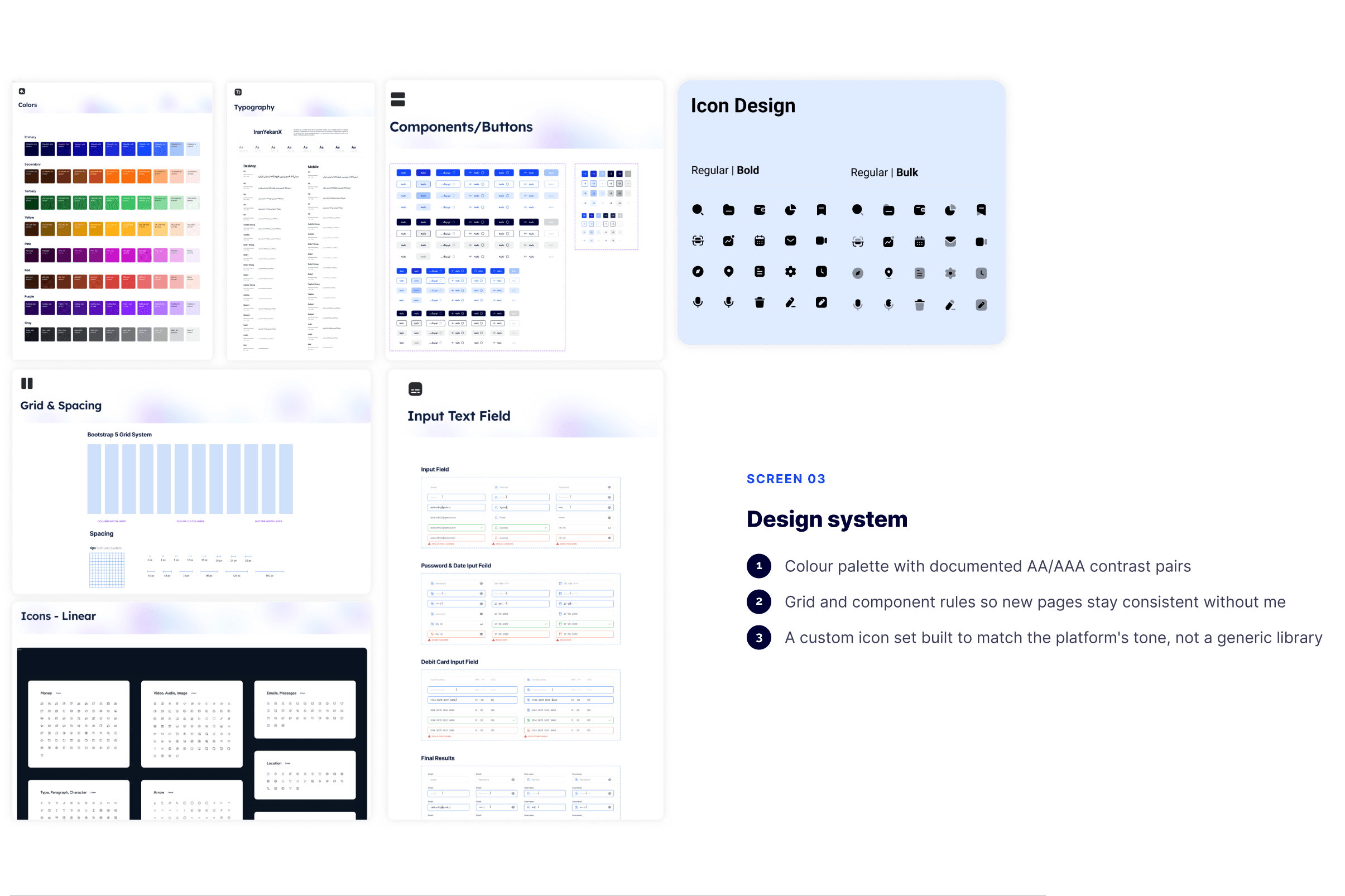
Build the language before the screens


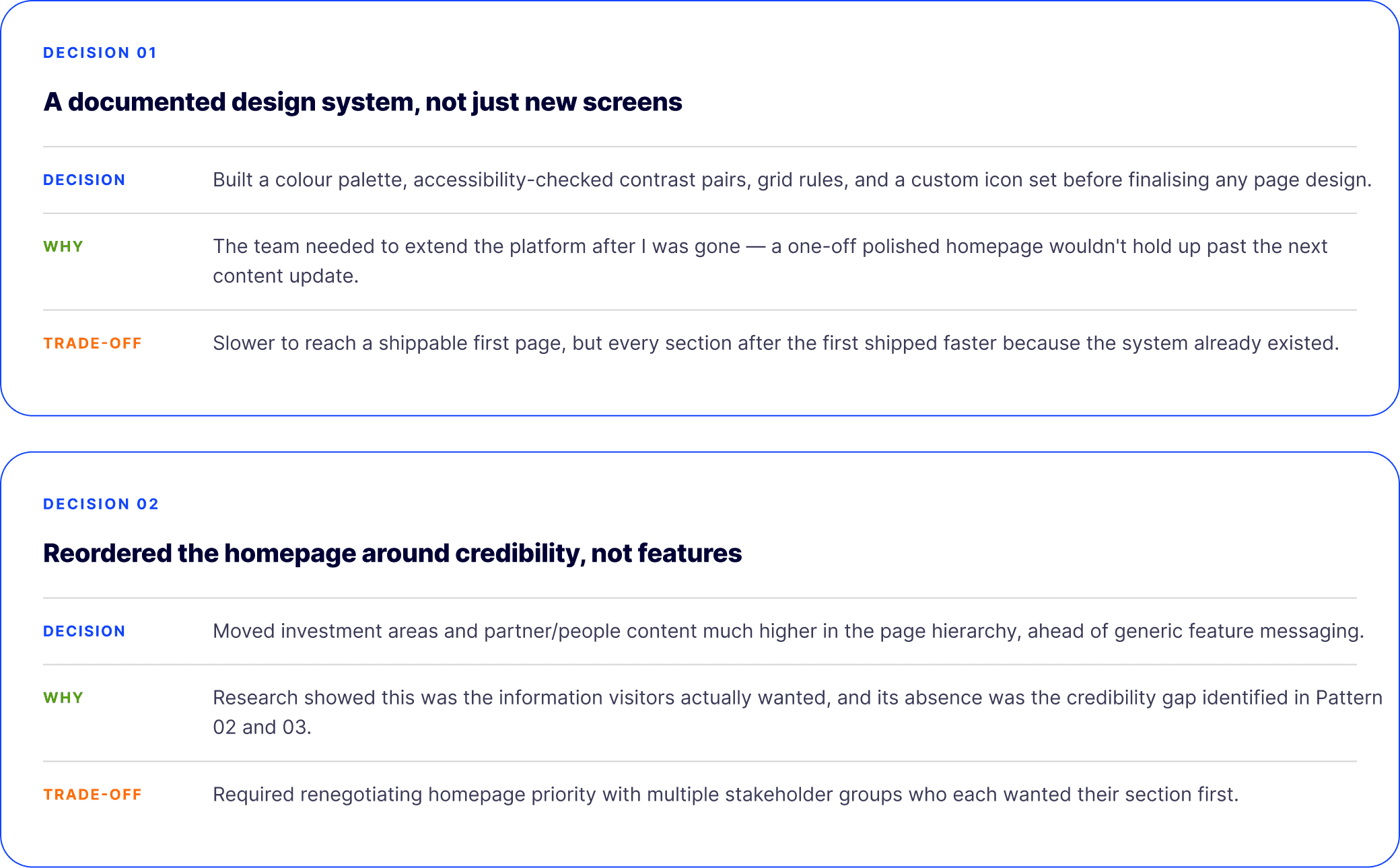
The first decision was to build the design system before any high-fidelity screen. It felt slower in week three. It saved weeks in week twelve.

Built in Figma with a bridge to Storybook. Engineers adopted it fully. By hand-off, there were almost no questions about spacing, color, or typography, the vocabulary was already shared.


From 11 nav items to 5

The navigation had eleven top-level items with no visible hierarchy. The Strategy Lead pushed back. I ran a card-sorting exercise with eight internal stakeholders. The data won the argument.


Iteration & Testing
Where the story gets interesting

Good design is never finished on the first pass. The iterative phase is where the most important decisions happened, and where collaboration with engineering and product became genuinely creative.


A/B testing at scale

Homepage hero: Variant A (static headline + single CTA) vs Variant B (rotating startup spotlight). Three weeks, tracked via Mixpanel. Variant A showed +14% click-through on the primary CTA. Launched A as default.

Service Blueprint
Mapping the full system

A service blueprint helped the team see beyond individual screens — aligning user-facing touchpoints with the backstage processes, data flows, and engineering dependencies that made them possible. It became the shared reference point between design, product, and engineering throughout delivery.


Before & After

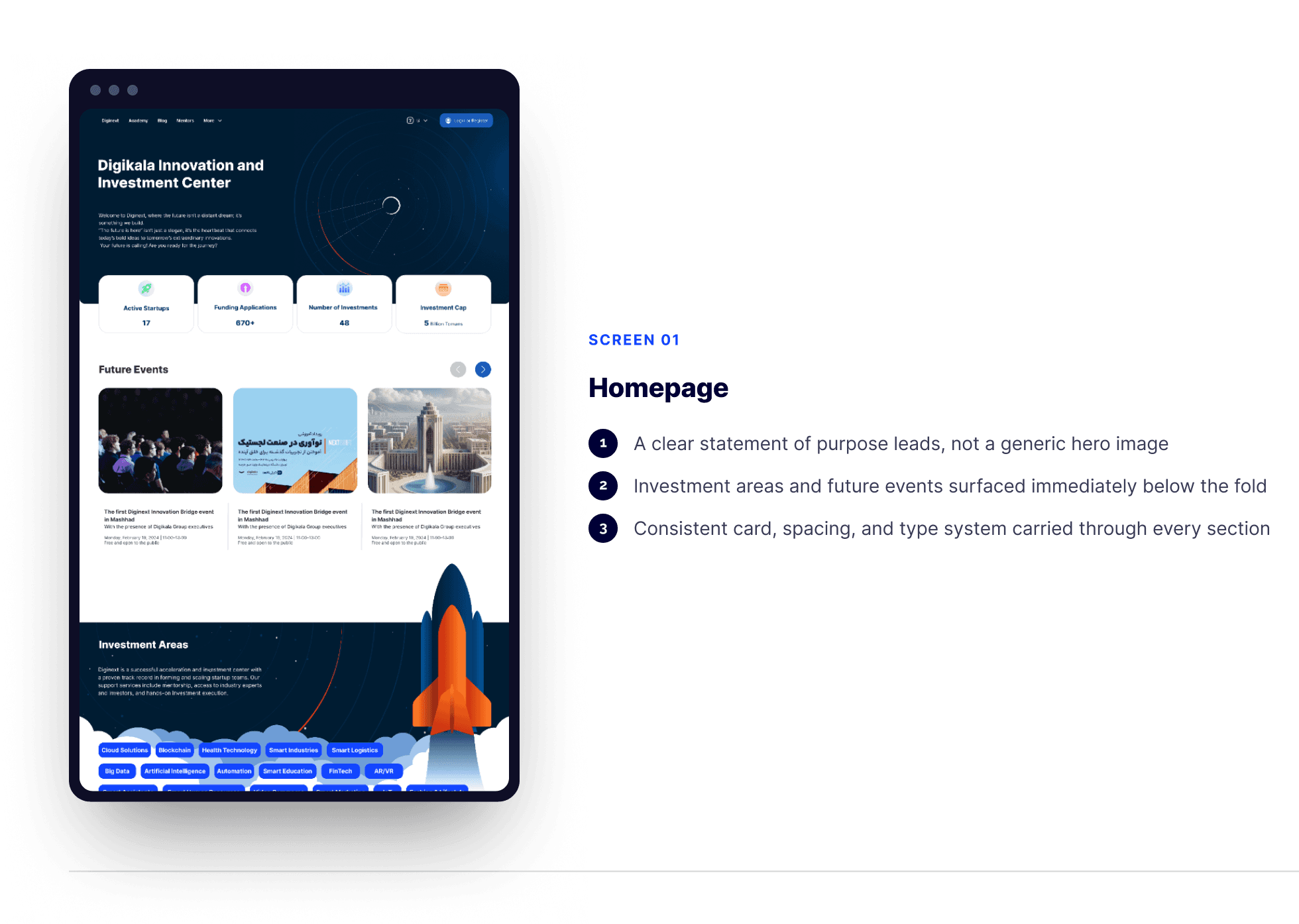
Every row maps directly to a user pain point identified in research. These are not aesthetic preferences.

What I learned

What I learned

The most impactful work in this project was often the most invisible: restructuring a navigation, removing eight form fields, adding a focus ring.

I also learned something uncomfortable. My first mentor discovery design was wrong. A 44% completion rate told me so clearly. I rebuilt the section entirely between rounds, the result was 34 percentage points better.

The best thing you can do for your users is stay curious about why they struggle, and honest about when your first answer was not the right one.

Design, technology, and your vision; I’m here to help transform your creative vision into meaningful digital experiences.

Available For Work

Designed

by LucidaLab • 2025

Design, technology, and your vision; I’m here to help transform your creative vision into meaningful digital experiences.

Available For Work

Designed

by LucidaLab • 2025

Design, technology, and your vision; I’m here to help transform your creative vision into meaningful digital experiences.

Available For Work

Designed

by LucidaLab • 2025